

I’m a BIG fan of trails riding (bicycle vs motorcycle, although the motorcycle stuff is good too). Came across this video on a Blog I follow & it’s pretty amazing. I can only dream of having this kind of coordination and balance.
Cincinnati Ohio – HDR Photography (Part 3 of 3

Final HDR image of the Cincinnati Skyline at night. This one is not as vivid as the other two but I still like it. Cincinnati is hard to shoot because all of the good vantage points are very hard to get to at night.

Cincinnati Ohio – HDR Photography (Part 2 of 3)
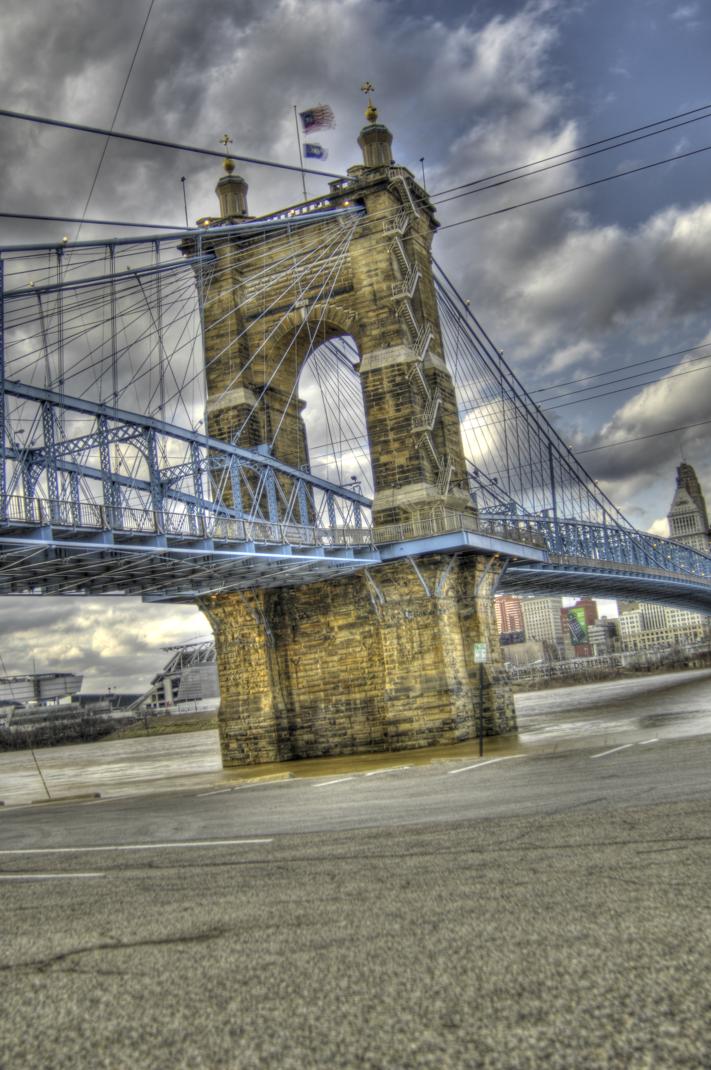
Here’s another HDR image of the John A. Roebling Suspension Bridge that connects Covington, KY and Cincinnati, OH.

Cincinnati Ohio – HDR Photography (Part 1 of 3)

I had the opportunity to spend some time in Cincinnati over the weekend and spent part of that time playing with a new type of photography (new to me). HDR photography uses multiple photos set at various exposures (over/under the correct exposure). Once combined the images reveal a lot more detail than the properly exposed image.

If You See Something, Say Something

Oh great, the “If You See Something, Say Something” (IYSSSS) campaign is launching PSA’s to get the public even more worked up…
I started seeing the IYSSSS billboards around Indianapolis prior to this year’s Super Bowl. The funny thing is, at least to me, the toll-free number they give is not using an acronym or anything so the chances of someone actually remembering it is slim. It’s OK, that’s what 911 is for!
Worldwide Communications Still Using Cable

 While working my way through the several-hundred RSS feeds I subscribe to I came across an article that referenced an Epic Net Outage In Africa. Curiosity got the best of me and I started looking for more information on the worldwide use of underwater communications lines. Once-upon-a-time these (copper) cables, used to connect the worlds continents, were made up of hundred (thousands) of copper strands. These, for the most part, have been replaced by fiber optic cabling that can not only carry greater amounts of data but are smaller (and presumably cheaper) than copper conductors.
 Communication companies are using these cables, resting on the sea floor in all of the worlds oceans, to move massive amounts of data between land masses. Typically the majority of the information you access on the internet is stored nearby in servers that cache data that others have already referenced. Why send the same data over long distances if it can be stored regionally? When you end up requesting a piece of data that’s actually located in another country you are most likely utilizing these underwater cables to transfer the data from its source to your computer. Here’s a good test for you to try. In Windows click START, RUN and type CMD [ENTER]. In the command line window that pops up type Ping 61.64.53.64 [ENTER]. You should get something like this:
  Make a note of the “Time=237ms” piece, you just communicated directly with a server in Taiwan. Now ping 74.125.225.78
  Notice how the “time” is a lot less? This, in geek speak, is called “Latency“. You just communicated with one of the thousands of servers Google has on the Internet (many of them local to large metropolitan areas). Now granted, we’re talking milliseconds but that’s an eternity in the computer world. By pinging the actual IP address of the computer in Taiwan you bypassed any caching by your ISP and communicated with the server directly.
 1000 Milliseconds equals one second so when you communicated with the server in Taiwan you sent a piece of data at the speed of light over 7700 miles (and BACK) in 0.25 seconds. How amazing is that? When they figure out how to digitize the human body you should be able to travel anywhere in the world in just a few seconds (or less). As someone who’s used satellite communication in the past for voice communication I can assure you that the delay can be in the 1000’s of milliseconds and it’s a real pain to communicate with someone using a satellite that’s just 4-700 miles overhead.
Since we’re becoming a more “global” society it’s important, now more than ever, that these undersea communication links are available (and functional). Hopefully the telecommunication companies are investing in more capacity to handle the ever increasing need to transmit data around the world.

Fountain Square – Indianapolis, Indiana
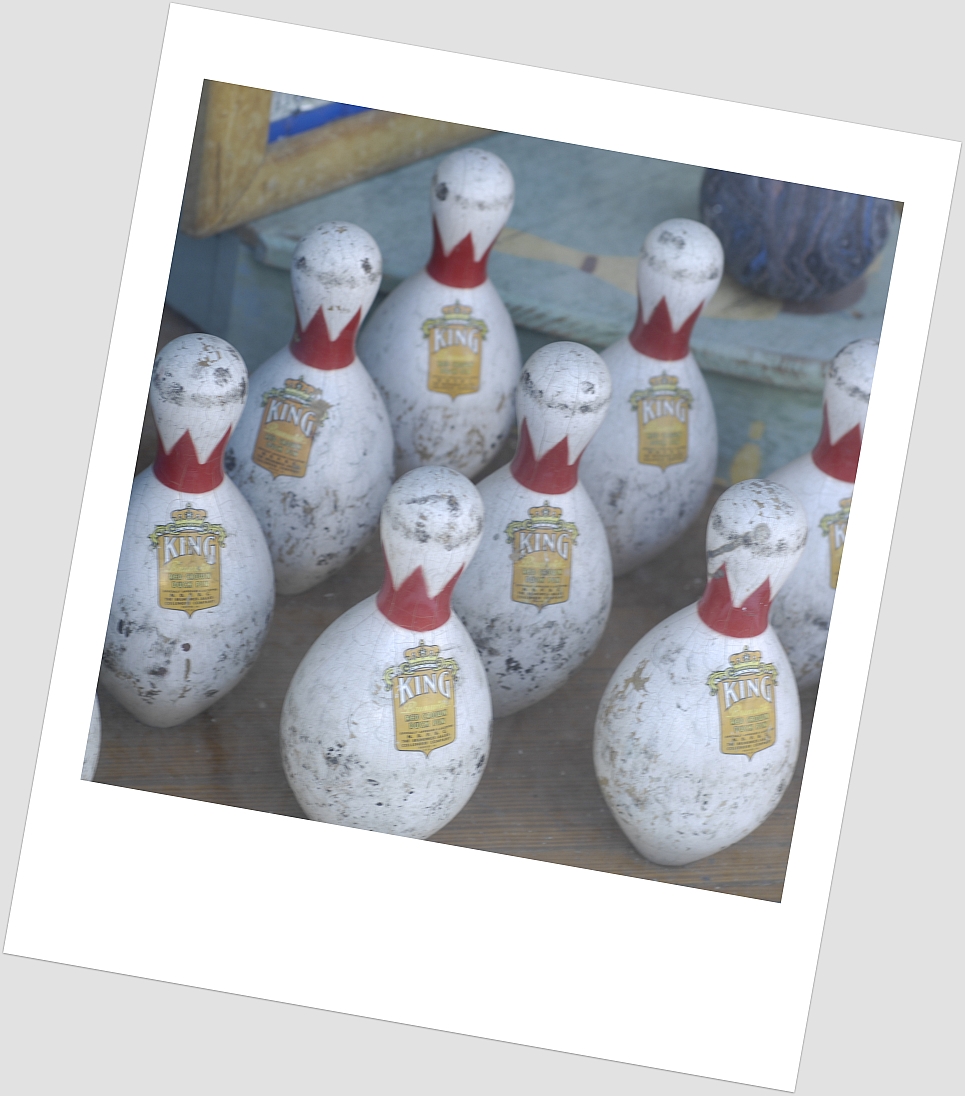
Some images from our recent photo excursion to Fountain Square in Indianapolis


Public Art in and Around Indianapolis

 While doing a little online research last weekend I came across the Indianapolis Public Art website. Even better they have a Public Art Locator that pinpoints pieces on a Google map. It’s pretty amazing the number of statues and sculptures in the area. I wanted to share the site with the IndyScan visitors since it’s an awesome resource.
What are some of your favorite pieces in Indianapolis? I’m a big fan of the Brick Head on Mass Ave. and the Solders and Sailors monument.
Indianapolis – Siam Square

 Last Sunday my daughter and I went to Fountain Square to shoot some photos. I asked her what she wanted for lunch & without hesitation she said “Siam Square“. Having never been to this restaurant I was happy to go based on the glowing feedback from friends.
Note, all images in this review are from the Internet because we actually left the cameras in the car while we ate & the lighting did not work for phone pictures. Rookie mistake for sure.
 The menu at Siam Square is pretty typical of any Thai restaurant including lunch specials during the week. I’ve wanted to try a Curry dish for a while now. I’m usually a Pad Thai (chicken/pork) guy but I was feeling a little adventitious today.
My daughter ordered the Chicken Pad Thai and, after a brief discussion with our server, I went for the Red Curry. I was not sure what to expect but sometimes you just have to throw caution to the wind.
 I’m glad I took a chance because I was VERY impressed with the Red Curry. It was spicy (medium), sweet and had a lot of interesting flavors. The bamboo shoots and green beans were plentiful as was the thinly sliced chicken. Several Thai Basil leaves were mixed through the dish and they added a wonderful herbal flavor.
 We’ve visited many Thai places this last year and the Pad Thai almost always is a little sweet (sometimes too sweet). The Pad Thai at Siam square had a nice “char/caramelization” mixed in and the noodles had a great texture. The Pad Thai has to be one of the best I’ve had to date.
Service was very attentive and the prices were on par with other Thai places in the Indy area. We spent some time exploring the Fountain Square District and identified several places to try next time we’re in the area. I think Duck Pin Bowling is on the agenda for the next visit!
